Fall rain has a way of exposing worn wiper blades quickly. A windshield that looked fine through a dry summer can suddenly become streaky, hazy, or difficult to see through once the weather turns wet.
Wiper blades spend months dealing with sunlight, heat, dust, road grime, and temperature changes. By fall, the rubber can already be hardened or damaged even if the blades still look decent from outside the car. Before the rainy season settles in, it is worth checking whether they are still clearing the glass properly.
Streaks Are One of the First Signs of Wiper Wear
A good wiper should leave a clean path across the windshield without repeated lines of water behind it. Once the rubber edge becomes worn, dirty, or hardened, streaks start appearing.
A few light streaks can sometimes come from dirt on the blade or windshield. Cleaning both surfaces can tell you a lot. If the same streaks return immediately after cleaning, the rubber edge is probably no longer making even contact with the glass and replacement makes more sense.
Chattering Means the Blade Is Not Moving Correctly
Wipers should travel across the windshield with a steady movement. If they chatter, skip, or bounce across the glass, the blade is not staying planted the way it should.
Dry or hardened rubber is a common cause, especially after a hot summer. A bent wiper arm, weak arm tension, or contamination on the glass can create similar symptoms. At our shop, we look at how the complete wiper assembly moves instead of assuming every noise means the blade itself is the only problem.
Cracked or Split Rubber Is a Clear Replacement Sign
Take a close look at the rubber edge of the blade. Cracks, splits, missing pieces, or sections pulling away from the frame are all signs that the blade has reached the end of its useful life.
Rubber deteriorates with age even when the wipers are not used very much. Sun exposure and summer heat can stiffen the edge so much that it no longer follows the curve of the windshield. Once the blade starts separating or cracking, waiting for the next heavy rain is not worth it.
Hazy Areas Can Be Worse Than Obvious Streaks
Some worn blades do not leave sharp streaks. Instead, they spread a thin film of water across the glass that creates a cloudy or smeared view.
That haze becomes especially distracting at night when headlights reflect through the moisture. You might feel like the windshield is constantly dirty even though you have just used the washer system. If the blade is spreading water instead of removing it, the rubber is no longer doing its job properly.
Check the Washer System at the Same Time
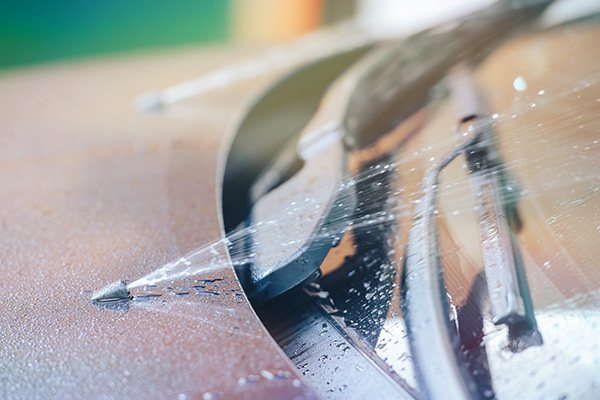
Good wiper blades cannot help much if the windshield washer system barely works. Fall is a good time to make sure the reservoir is full, the spray nozzles are aimed correctly, and the pump is delivering enough fluid to clean the glass.
During an inspection, we also look for weak spray patterns, clogged nozzles, damaged hoses, and washer fluid leaking before it reaches the windshield. Washer fluid helps remove road film, pollen, dust, and grime that rain alone does not wash away. Keeping the system working properly helps maintain clear visibility as wet weather becomes more frequent.
Do Not Forget the Windshield Itself
Sometimes the wipers get blamed for a visibility problem that starts with the glass. Wax residue, oily film, tree sap, road grime, and small chips can all change how water moves across the windshield.
Thoroughly cleaning the glass can improve wiper performance, but damaged glass needs separate attention. Small chips can spread as temperatures change, and scratches in the wiper path can scatter light during dark, rainy drives. Regular maintenance should include checking both the blades and the surface they are trying to clean.
Replace Wipers Before You Need Them in Heavy Rain
Wiper blades are inexpensive compared with the visibility they provide. If they are streaking, skipping, cracking, or leaving large sections of water behind, replacing them before the rainy season is the smarter move.
There is no perfect replacement interval for every driver. A vehicle parked outside in strong sun can wear blades faster than one kept in a garage. What matters most is how they perform when the windshield is wet. If you have to look around the streaks to see the road clearly, the blades have already gone too far.
Get Windshield Wiper Service In Aurora, CO, With Aurora AutoPros
If your wipers are streaking, chattering, or leaving your windshield hard to see through in the rain, Aurora AutoPros in Aurora, CO, can check the blades, washer system, and wiper operation before fall weather gets worse.
Schedule a wiper check and make sure you can see clearly when the next rainy commute starts.