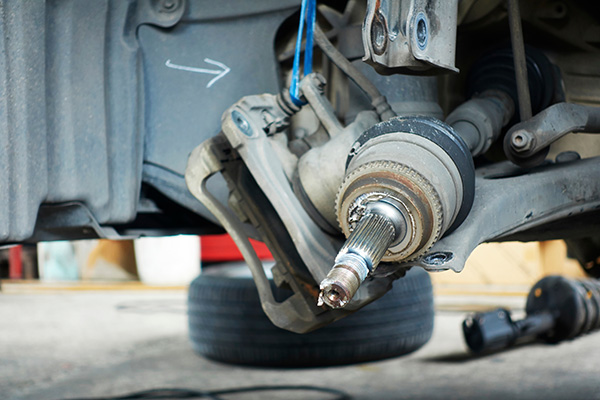
Cold snaps are hard on the parts that put power to the ground. Grease thickens, rubber boots stiffen, and road salt works into metal seams. Without a little attention, those conditions turn small cracks into torn boots and quiet wear into the classic parking-lot click.
Here is a practical winter plan to keep axles and CV joints quiet, smooth, and reliable.
Why Cold Weather Targets CVs And Axles
CV joints rely on pliable rubber boots and healthy grease. In low temperatures, rubber loses flexibility, and tiny surface checks become real splits as the suspension moves. At the same time, the grease thickens, which pulls more on the boot as the joint articulates. Salt and slush spray into wheel wells, and any pinhole in a boot lets contamination replace clean grease.
That grit accelerates wear on the bearings and cage until the joint clicks on tight turns or vibrates on the throttle.
Early Signs Your CV Joint Needs Attention
- A rhythmic click or tick when turning sharply from a stop
- Grease splatter on the inside of the wheel or along the strut
- A shudder under light acceleration that fades at steady speed
- A clunk shifting from drive to reverse after an overnight sit
- A faint burning smell from grease flung onto a hot exhaust or brake
Grease, Boots, And Clamps: What Fails First
Most winter failures start at the boot. Outer boots flex the most and live closest to road spray, so they go first. Once a split opens, thin, salt-laced slush displaces the moly grease and the joint runs dry. Clamps matter too. A loose ear clamp lets grease pump out and water wick in, even without a visible tear.
We often see joints saved when a small split is caught early and the boot and grease are replaced before the bearings pit. Waiting until it clicks almost always means a joint or axle assembly.
How Salt And Freeze–Thaw Affect The Rest Of The Driveline
Salt crystals attract moisture and cling to metal seams. On axles, that means corrosion at the spline where the shaft meets the hub, and at the axle nut threads. Corrosion can bond the spline to the hub, making future service more labor-intensive and risking damage during removal. Freeze–thaw cycles also work on hub seals and wheel bearings.
If a torn boot coats the seal with gritty grease, water and fine grit ride past the lip and shorten bearing life. A winter axle issue left alone can become a bearing and hub issue by spring.
A Simple Winter Maintenance Routine
Inspect boots monthly. Look for hairline cracks at the accordion folds and small wet patches near clamps.
Wipe the inside of wheels when you rotate tires. Fresh grease dots are an early warning.
Rinse wheel wells after storms to flush salt from boots, clamps, and strut housings.
Listen during slow, full-lock turns in a parking lot. Recheck the same spot a week later to confirm patterns.
Repair Decisions: Boot Service vs. Axle Replacement
If the boot has just started to split and there is no clicking yet, a boot-and-grease service can be a smart, lower-cost repair. The joint is cleaned, inspected, repacked, and sealed with new clamps. Once clicking starts, the bearing surfaces are probably pitted, and the longer-term fix is a new CV joint or complete axle.
Replacement also makes sense when corrosion has damaged the splines, when the inner joint causes acceleration vibration, or when mileage is high and both boots show aging. We typically evaluate both sides; if one joint failed from age and environment, the other may be close behind.
Install Details That Protect New Parts
Good parts can still fail early if the installation is rushed. Axle nuts must be torqued to the exact spec with the vehicle on the ground to set bearing preload correctly. The hub face and splines should be cleaned so the axle seats fully without force. Boots need the correct volume of the specified grease, not a guess, and ear clamps must be crimped with the proper tool for a gas-tight seal.
We take these steps every time, and it is why winter replacements leave quiet and stay that way.
Get Drivetrain Service In Aurora, CO With Aurora AutoPros
Hearing a click on tight turns or seeing grease inside a wheel? Visit Aurora AutoPros in Aurora, CO. We inspect boots and clamps, repack joints when they are still salvageable, and replace axles when that is the durable fix. We torque hardware to spec, protect splines from corrosion, and road test so the car leaves quiet and smooth.
Schedule a drivetrain check today and head into the next cold snap with confidence.